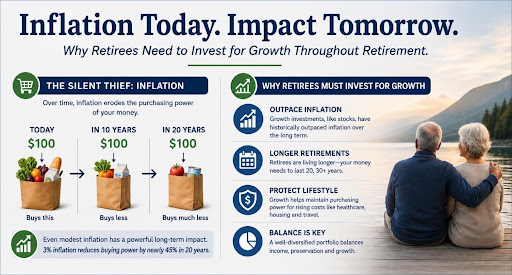
Inflation is often called the "silent thief" of retirement as over time it gradually erodes purchasing power. While a modest inflation rate may not seem alarming, inflation's long-term impact can be significant for retirees who may spend several decades in retirement.
Since the post-Covid recovery, everyday expenses such as groceries, healthcare, housing, car & home insurance, automobiles and travel are all substantially higher, making it critical for retirees to have a plan to keep pace with tomorrow's inevitable higher costs.
A dollar today will not buy the same amount of goods and services a decade from now
One of the biggest misconceptions about post-retirement investing is that retirees should become a conservative investor once the paycheck stops. While preserving assets is important, retirees who avoid growth investments increase the risk of dramatically altering their post-retirement lifestyle. Allocating too much of a portfolio to cash, bonds or low-return investments can leave retirees vulnerable to inflation. Over time, the purchasing power of those assets can decline, even if account balances appear stable.
Retirees working with an investment professional have the ability to be educated on the benefits of maintaining an appropriately aggressive investment strategy throughout retirement. Growth-oriented investments, such as stocks and diversified ETF (exchange traded funds) portfolios, have historically provided returns that outpace inflation.
Although equity markets will inevitably experience volatility, often more frequently than investors would like, retirees should look beyond short-term market weakness and focus on growing their portfolios to help keep pace with rising living expenses and longer life expectancies.
A retirement plan built solely around capital preservation will struggle to keep pace with inflation
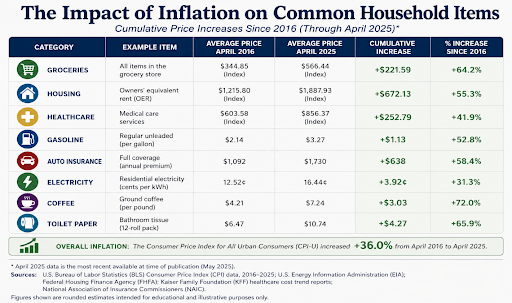
A more aggressive approach to investing during retirement does not mean taking unnecessary risks or involve speculative investing. Rather, it means maintaining a diversified portfolio that includes enough growth components to support long-term financial security. Today, many retirees are living longer than previous generations, meaning retirement may need to last several decades. During the last decade, inflation has dramatically reduced spending power.
In the chart below we gathered costs of many common household expenses, since 2016.
A thoughtful retirement strategy should focus on balancing income requirements, preservation of capital, while keeping purchasing power intact. By maintaining exposure to growth investments, retirees can better position themselves to preserve their lifestyle over several decades of retirement. Working with your WT Wealth Management investment professional can help retirees determine the right investment mix for their unique situation and lifestyle.
Ultimately, retirement planning is not simply about protecting assets; it is about protecting your retirement from the "silent thief", inflation. In a world where prices continue to rise, investing appropriately may be one of the most important decisions retirees make.
WT Wealth Management Learning Spotlights are designed to inform, inspire, and encourage meaningful dialogue between our clients and advisory team. Our mission is to demystify complex economic and investment topics, offering clear, practical insights that connect financial theory to real-world decisions.
 Home
Home