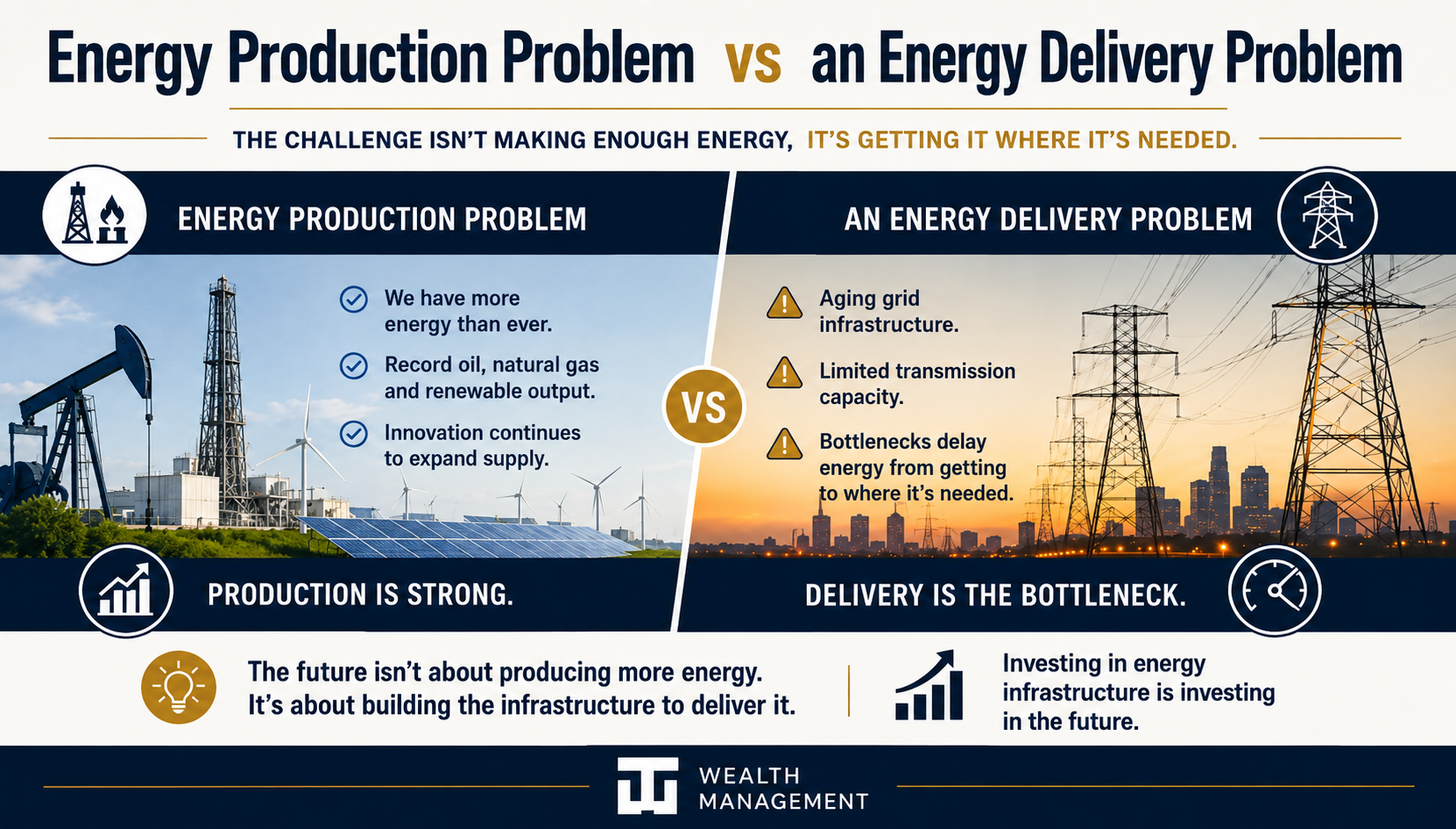
One of the most misunderstood challenges in the Data Center/Artificial Intelligence (AI) expansion currently underway is the distinction between an energy production problem and an energy delivery problem.
For years, discussions around energy have centered on power generation. Should we invest in renewables, natural gas, coal, oil, nuclear power, solar, hydroelectric or even thermal energy? However, the bigger challenge facing the country today is not generating electricity but delivering where it is needed; to end users.
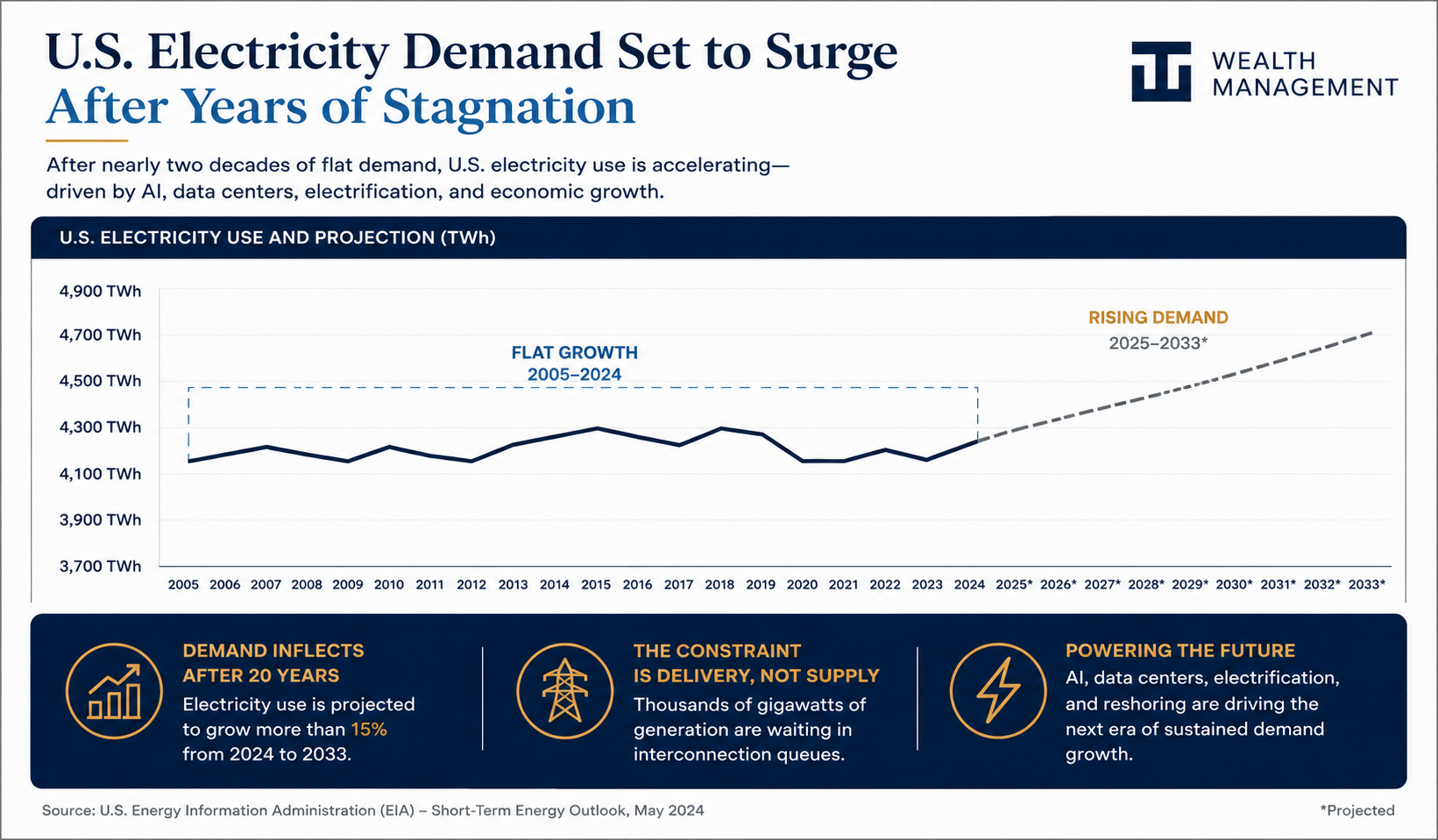
Power distribution hurdles become news-worthy when viewed through the lens of the recent generational demand trend. Between 2005 and 2024, U.S. electricity demand was largely flat. As a result, much of the nation's transmission and distribution infrastructure aged without significant updating or expansion.
Since 2025, electricity demand has grown at a pace not seen since the industrialization around WWII. Artificial intelligence and data centers are driving higher energy consumption, while electric vehicles and the reshoring of manufacturing continue to increase demand across the country. As these trends accelerate, they place additional strain on a system that was designed for a very different era.
Most of our country’s critical energy infrastructure
is behind 2030 energy needs
Every digital innovation depends on one critical foundation: reliable power infrastructure. Without the ability to generate, transmit, and distribute electricity efficiently, many of today's transformative technologies cannot achieve their full potential.
Energy industry research has shown that there is a tremendous amount of new electricity generation waiting to come online. Thousands of gigawatts of power are currently sitting in queues, unable to connect to the grid. In fact, the capacity stuck waiting for grid access is nearly double the entire currently installed generation capacity of the United States.
(1) The continued challenge is the inability of existing infrastructure to move electricity efficiently from where it is produced to where it is needed.
At WT Wealth Management, we believe many of the greatest investable opportunities are found not in the widget itself, but in the infrastructure that makes the widget possible. Many of our investment strategies are designed to capitalize not only on this generational trend of digital expansion, but on the "picks and shovels" industries supporting the current expansion.
The digital economy will grind to a halt unless there is a substantial investment in energy infrastructure
Many of the investment strategies our clients benefit from are designed to capitalize not only on the direct capital expenditures being deployed into artificial intelligence and data center expansion, but also on the critical "picks and shovels" supporting this technological revolution. Areas such as energy grid infrastructure, cooling technologies, cybersecurity, cloud computing, blockchain infrastructure, and semiconductors represent the essential building blocks that enable these innovations to scale.
As demand for electricity continues to accelerate, the “picks and shovels” offer an excellent investable opportunity in the years ahead. As always, please contact your investment professional at WT Wealth Management to discuss how these opportunities can fit into your current personalized plan.
The WT Wealth Management Learning Spotlights are designed to inform, inspire, and foster meaningful dialogue between our clients and the WT Wealth Management team. Our goal is to demystify complex economic and investment topics, offering clear, practical insights that connect financial theory to real-world decisions.
SOURCES
- https://rmi.org/resources/interconnection-reform-ai-data-centers-generator-queues/
 Home
Home